
Qualification
Expert Knowledge on the GW129 Training Course
Comprehensive GW129 training provides far more than just theoretical expertise. It lays the foundation for working safely around power systems and helps companies identify hazards early on.
On this page, you will find key content from the GW129 training course. Topics range from contractors’ obligations and ensuring public safety to working safely near gas, water, electrical, telecommunications, and district heating lines.
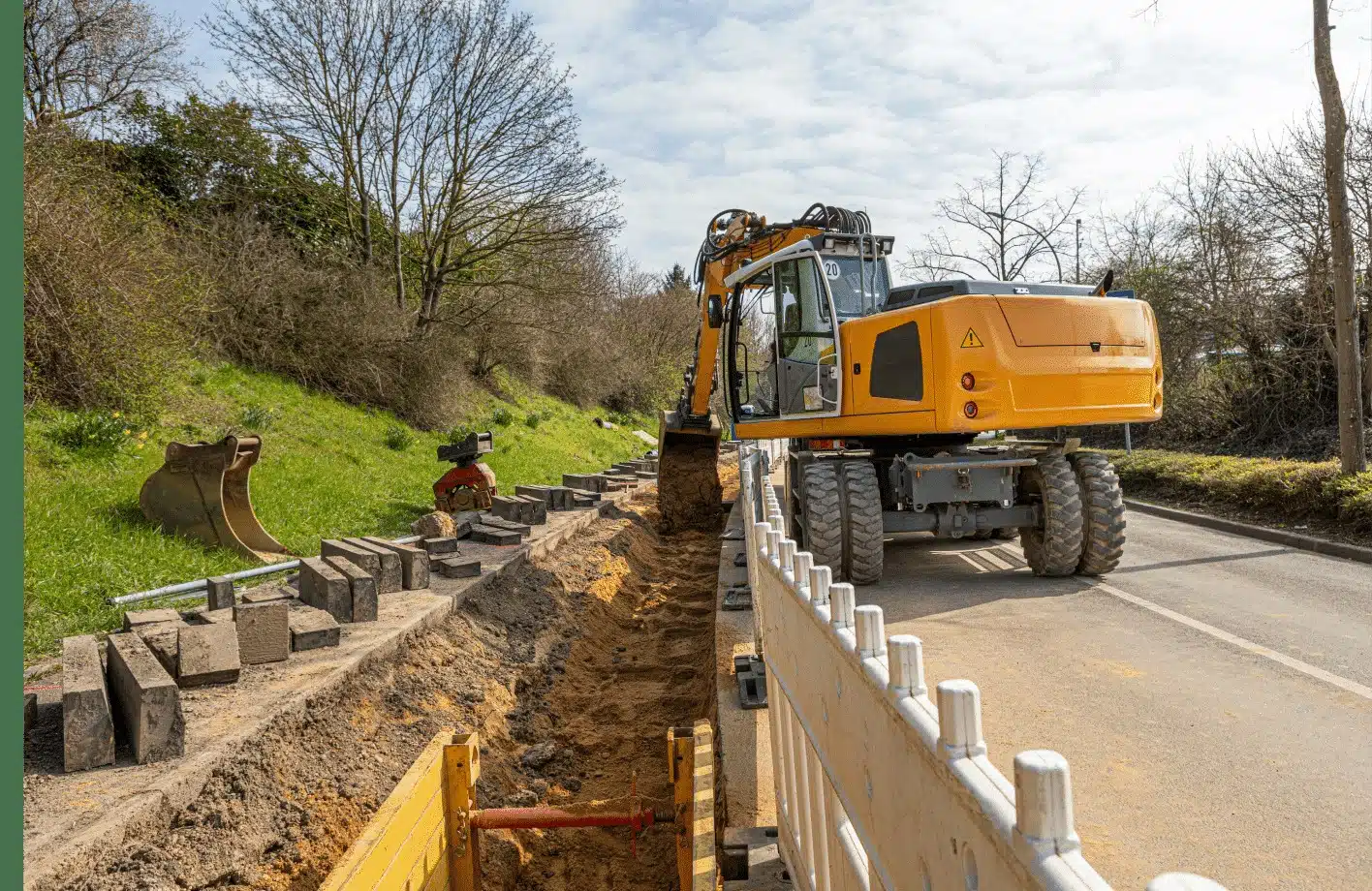
GW129 Training with
Schaufelmann® Certificate
Objective
Working safely begins long before the first shovel hits the ground
Construction work in the vicinity of utility lines is among the most responsible tasks in civil engineering and utility line construction. Beneath the ground, gas, water, electricity, district heating, and telecommunications lines often run in very confined spaces. Even accidental damage can have serious consequences—ranging from service interruptions and significant property damage to immediate danger to employees and third parties. This makes it all the more important to identify potential risks before construction begins and to plan appropriate protective measures well in advance.
Therefore, a GW129 training course does not focus solely on teaching technical regulations. Equally important is understanding how the theoretical requirements can be applied safely and practically to various construction site situations. Structured work planning, awareness of potential hazards, and responsible conduct by all parties involved form the foundation for safe construction.
Schaufelmann GmbH conducts its GW129 seminars exclusively as live training sessions—either online or in-house. Experienced trainers present the material using practical examples, explain typical situations encountered in everyday construction site work, and are available to answer participants’ technical questions throughout the training. The training concludes with a written exam. Upon successful completion, participants receive their personal GW129 certificate as proof of qualification, valid for three years.
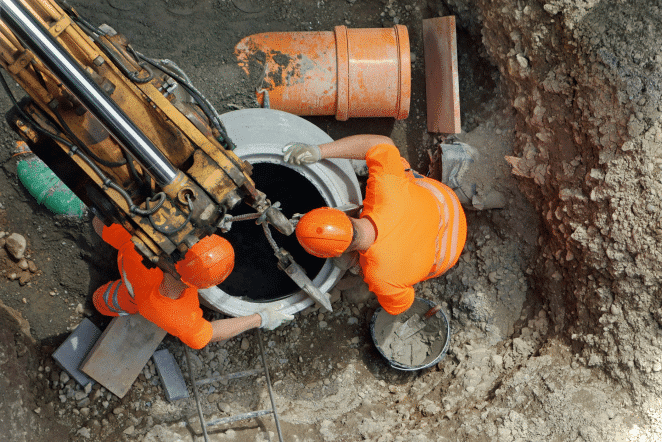
On this information page, we have compiled important topics covered in GW129 training that are particularly important for the safe handling of utility lines. The following content explains contractors’ obligations, safety measures, and the duty to investigate, as well as important rules of conduct when working on gas, water, electricity, district heating, and telecommunications lines. The goal is to explain these concepts in an easy-to-understand way and to provide expert insight into the content of a high-quality GW129 training course.
Topic Overview
Safety When Working Near Power Grid Facilities



Duty to Inquire and Duty to Ensure Public Safety
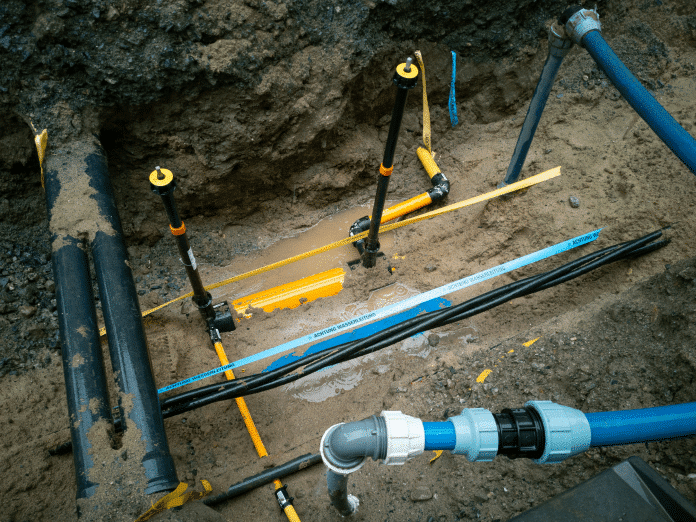
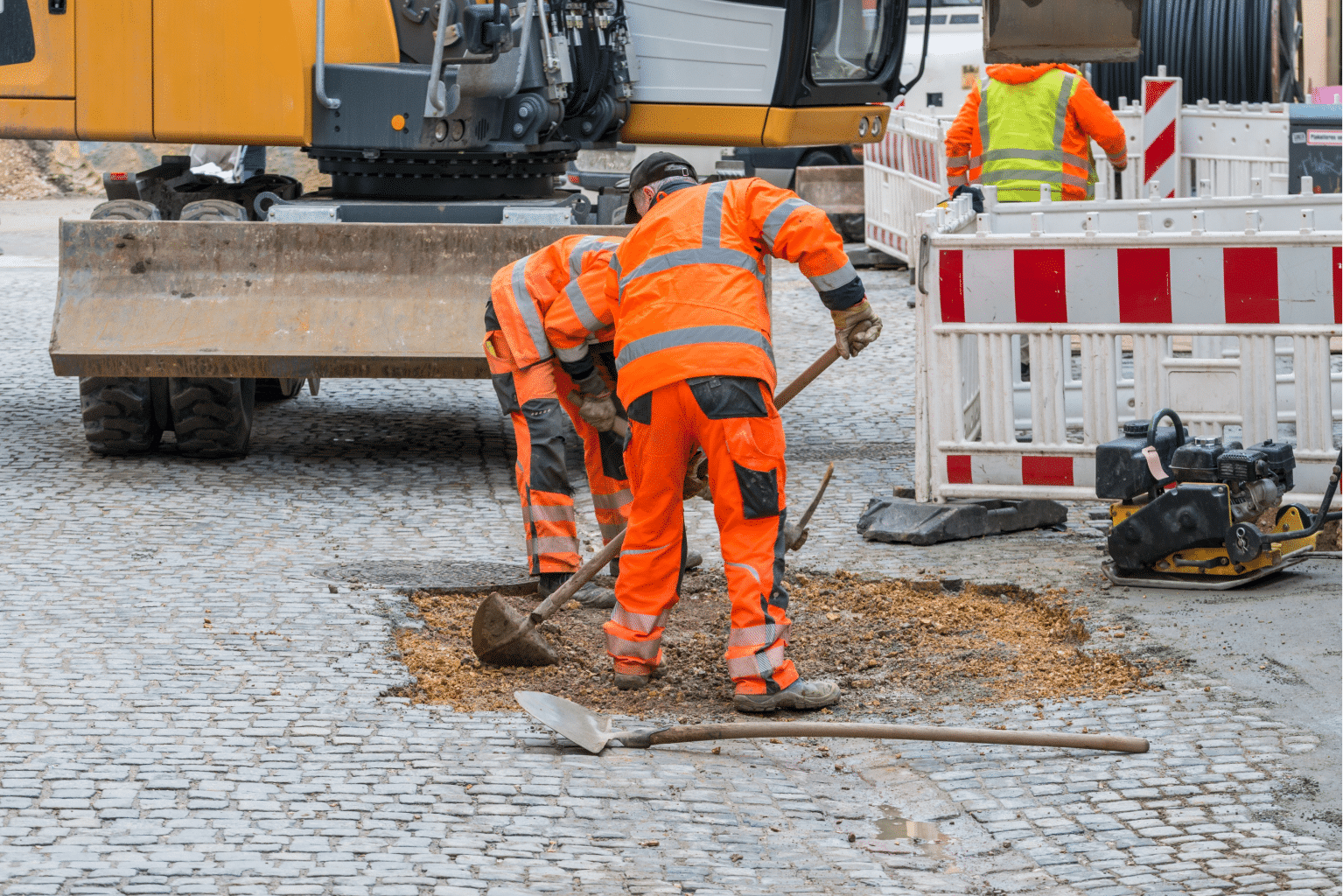
Before work begins, the contractor must obtain information about existing utility lines and other underground facilities in the work area. This includes up-to-date utility line information from the respective utility providers and a careful review of existing as-built documentation. At the same time, the construction site must be set up and operated in such a way that employees, road users, and third parties are not endangered.
Responsibility begins even before construction starts
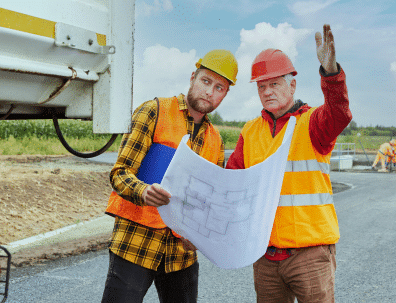
Careful work planning is one of the most important prerequisites for working safely in the vicinity of utility lines. Even before a construction project begins, construction companies are responsible for identifying potential hazards and taking appropriate measures to protect employees, residents, and existing utility lines. Much of the damage to underground lines does not occur during the actual construction work, but rather as a result of inadequate planning or a lack of information beforehand.
Among the most important obligations of a construction company are, in particular, the duty to investigate and the duty to ensure safety. Both are intended to identify hazards early on and ensure that construction projects proceed safely. In the GW129 training course, these obligations are not considered in isolation but are taught as part of responsible construction site management.
Hazards must be assessed and appropriate protective measures established. These include adequately sized safety distances from moving traffic, appropriate protective equipment, and organizational measures to ensure that the work is performed safely. If the available space is insufficient, additional protective measures must be provided.
Practical Knowledge from the GW129 Training Course
A safe construction site isn’t created only when construction equipment is brought in. Work planning, utility line surveys, and traffic safety measures must be coordinated before work begins.
Safety doesn’t end with the installation of traffic signs
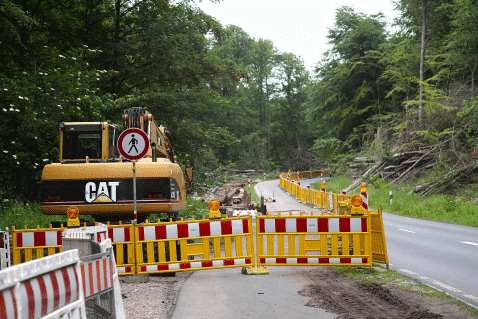
The duty to ensure traffic safety is one of the fundamental responsibilities when working in public traffic areas. Its purpose is to protect road users, workers, and bystanders from hazards that may arise from a construction site. Simply installing traffic signs and barriers is not sufficient. It is crucial that the entire work site be properly secured throughout the construction period, regularly inspected, and, if necessary, immediately adapted to changing conditions.
On workdays, work sites must be inspected at least twice a day. On non-workdays, at least one inspection is required. In addition, inspections must be conducted immediately if exceptional events, such as storms or severe weather, have affected traffic safety.
Only traffic signs that are clearly visible can fulfill their protective function. Traffic signs with severely damaged reflective sheeting must not be used. As a general guideline, traffic signs with more than 20 percent of their reflective surface damaged must no longer be used. Traffic signs in use must also bear a RAL quality mark.
Signage must be fully installed before construction work actually begins. As a general rule, traffic signs may not be placed within the roadway. Within built-up areas, the lateral distance from the roadway should generally be 0.50 meters, but at least 0.30 meters. Outside built-up areas, a lateral distance of 1.50 meters must be maintained.

Practical Knowledge from the GW129 Training Course
Deficiencies in traffic safety measures often arise not during setup, but during the construction period. Regular inspections help identify misaligned traffic signs, damaged barriers, or malfunctioning warning lights at an early stage.
Protection of Employees in Public Traffic Areas
Construction sites in public traffic areas pose special challenges for workplace safety. Workers often work in close proximity to moving traffic and are therefore exposed to additional hazards. In addition to proper traffic control measures, appropriate steps must therefore be taken to ensure the safety of everyone working on the construction site.
Potential hazards must be assessed and appropriate protective measures determined as early as the work planning stage. These include sufficiently large safety distances from moving traffic, appropriate protective equipment, and organizational measures to ensure the work is carried out safely. If the available space is insufficient, additional protective measures must be provided.
The Technical Rules for Workplaces, particularly ASR A5.2, form an important basis for this. They specify requirements for work in the road environment and describe measures that can be taken to reduce hazards to employees. The content of ASR A5.2 is therefore also relevant to GW129 training because, in practice, occupational safety and utility line safety on construction sites cannot be separated from one another.
Practical Knowledge from the GW129 Training Course
Workplace safety doesn’t begin on the construction site. The necessary conditions are established as early as the planning phase to ensure that work in the vicinity of power grid facilities can be carried out safely.

Trained staff are better able to handle hazards
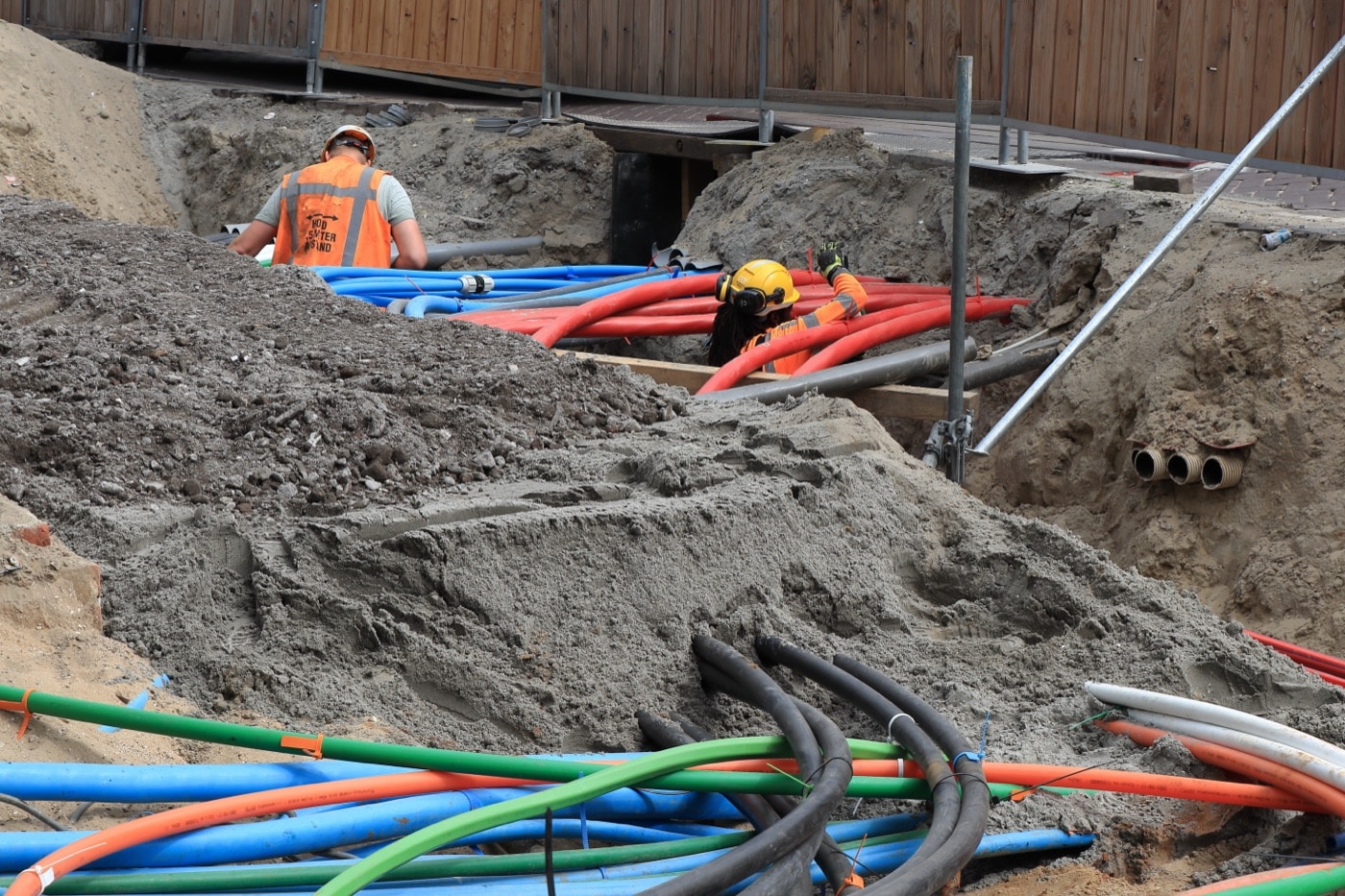
In addition to careful work planning, the selection of the employees assigned to the task is of particular importance. Work involving power grid systems requires technically qualified personnel who are aware of potential hazards and can reliably apply the necessary protective measures. The GW129 training program helps companies raise their employees’ awareness of these requirements.
Prevent Damage Before It Occurs
One of the most important tasks during construction work near utility lines is to prevent damage before it occurs. Damage to gas, water, electricity, district heating, or telecommunications lines can cause significant property damage, endanger people, and lead to major service disruptions. The duty to prevent damage therefore aims to identify potential risks early on and minimize them through appropriate organizational and technical measures.
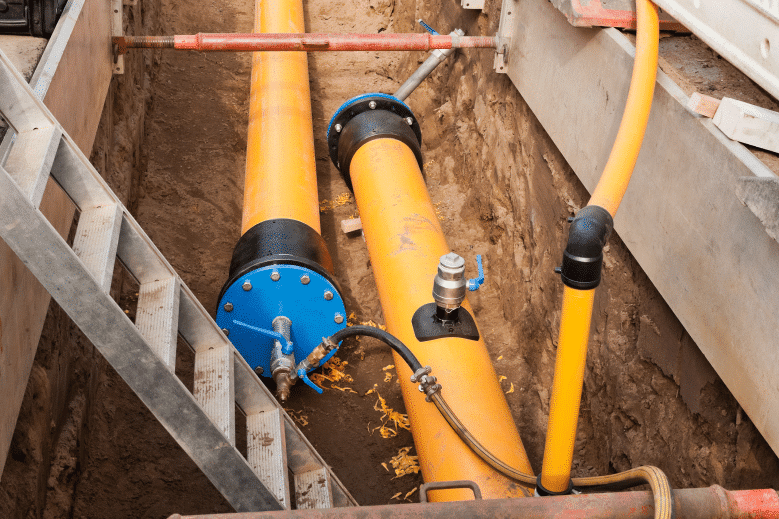
Before construction work begins, the contractor must identify all utility lines and underground structures present in the work area. Thorough utility information and the analysis of current as-built drawings form the basis for all subsequent work steps. Only once it is known which utility lines are present in the construction site area can appropriate protective measures be determined and the work be planned safely.
Practical Knowledge from the GW129 Training Course
The most effective way to prevent damage begins before the machine is first put into service: with comprehensive guidance, careful job planning, and qualified employees.
Qualifications and Responsibilities in Everyday Construction Site Operations
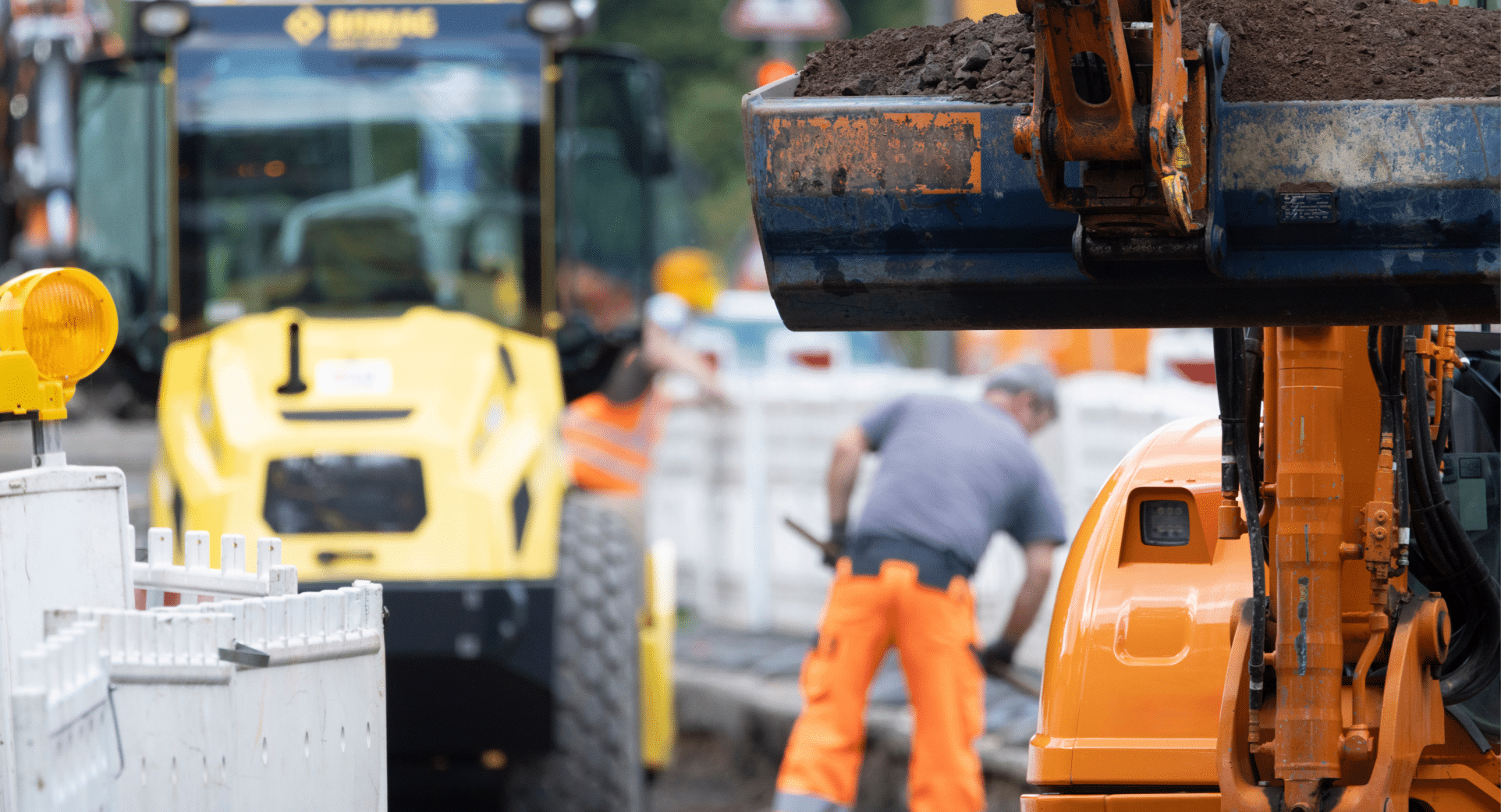
The use of construction equipment is part of everyday work on many construction sites. At the same time, excavators, wheel loaders, and other earthmoving machines pose a significant potential hazard in areas where underground utility lines are present. Even minor operating errors or insufficient knowledge of the pipeline route can lead to damage to utility systems and, as a result, to significant personal injury or property damage.
Construction equipment operators therefore carry a particular responsibility: they must know the course of existing utility lines, accurately judge the limits of their machine, and stop work when in doubt rather than take a risk. GW129 training conveys this sense of responsibility in a practical way and shows what matters most when operating construction equipment safely near utility lines.
Practical Knowledge from the GW129 Training Course
Damage to utility lines is often caused not by technical defects in the construction equipment, but by incomplete information or a lack of coordination on the construction site.

Safety doesn’t end with the installation of traffic signs
Before the groundbreaking ceremony takes place on a construction site or construction equipment is put into use, it must be determined which utility lines and other underground systems are located within the work area. The obligation to investigate is therefore one of the most important principles for working safely near utility lines and is a central component of every GW129 training course.
Before beginning a construction project, up-to-date utility information must be obtained from the relevant utility providers and carefully evaluated. The as-built drawings contained therein provide important information on the routing of existing gas, water, electricity, district heating, or telecommunications lines. However, as-built documentation serves only as a general guide and must be verified against the actual conditions at the construction site.
If the routes of utility lines cannot be clearly determined based on the available documentation, or if there are doubts about their accuracy, additional investigative measures must be carried out. To this end, pipes are carefully exposed, for example, through search slots or by digging hand-dug trenches. This work must be carried out with particular care and, whenever possible, using suitable blunt tools to prevent damage even during the investigation phase.
Signs posted on buildings, lampposts, or traffic signs may provide additional information about existing utility lines. However, they are not a substitute for a utility line survey. If utility lines or facilities are unexpectedly exposed during construction work, construction must be halted and the responsible utility provider must be notified.

Practical Knowledge from the GW129 Training Course
Most utility line damage is not caused by a lack of protective measures, but by incomplete information prior to the start of construction work.

Practical Knowledge from the GW129 Training Course
Even cables that appear unremarkable can have safety implications. The potential risks posed by damaged fiber-optic cables should not be underestimated, as they can cause not only communication disruptions but also hazards due to escaping laser light.
Take Special Care with Modern Communications Infrastructure
Fiber-optic cables are an essential component of modern communication networks. During civil engineering work, they can be affected just as much as traditional utility lines. Damage to these cables can lead to significant disruptions in Internet, telephone, or data connections and, in sensitive areas, can also interfere with business operations.
As part of GW129 training, participants are therefore taught why working near fiber-optic cables requires special attention. In addition to preventing property damage, protecting employees is also a key consideration. If fiber-optic cables are damaged, escaping laser light can pose a hazard. Direct eye contact with the damaged area must be avoided.
If a fiber-optic cable is damaged, safety measures must be taken immediately. For example, the damaged area can be covered—with dark plastic sheeting, for instance—to prevent direct visual contact. Bystanders must be kept at a safe distance, and the responsible network operator must be notified immediately.
Accurately Assessing Hazards Posed by Overhead Power Lines and Underground Cables
Working near power lines is one of the most sensitive tasks in civil engineering and utility line construction. Power lines may run visibly above the construction site as overhead lines or lie underground as buried cables. In both cases, safety distances must be strictly observed, and any damage can have life-threatening consequences.
If a power cable is damaged or there is reason to suspect damage, extreme caution is required. People outside the affected machine must be instructed to keep their distance. The operator’s cab must not be touched and must under no circumstances be left without careful consideration. There may be a risk of death in the area known as the “voltage funnel.”
The GW129 training course teaches these rules of conduct in a practical manner and explains why acting calmly is crucial in the event of an accident. Quick but well-considered decisions can help prevent further hazards.
When working near live overhead power lines, the required safety distances must be observed. Contact with or damage to a high-voltage power line does not necessarily result in the line automatically becoming de-energized. Therefore, potential hazards posed by overhead power lines must be taken into account as early as the construction site planning phase.
Practical Knowledge from the GW129 Training Course
In the event of an electrical accident, it is not always possible to tell whether a power line is still live. Therefore, follow these steps: Keep your distance, secure the area, notify the utility company, and do not take any action on your own.

Practical Knowledge from the GW129 Training Course
When dealing with gas lines, it is especially important to act calmly and methodically. Rash actions can increase the risk of danger. That is why typical emergency scenarios are discussed in detail in the GW129 training course.
Understand the Properties of Natural Gas and Respond Appropriately
Natural gas pipelines require special attention during construction work. Damage to them can lead to dangerous situations, especially if gas escapes and mixes with air. To properly assess risks, employees must be familiar with the basic properties of natural gas and the necessary safety procedures.
Natural gas is lighter than air and naturally odorless. To make it easier to detect, an odorant is added to it. The flammability range of a gas-air mixture is approximately between 4 and 17 percent. These properties are of great importance for risk assessment on construction sites.
Work on gas lines may only be performed by qualified, reliable, and trained personnel. The contractor remains responsible for selecting the personnel to be deployed. The GW129 training raises participants’ awareness of the risks involved in working near gas lines and the appropriate actions to take in the event of an accident.
If a gas line is damaged, avoid sources of ignition, evacuate people from the danger zone, and notify the responsible utility company as well as the fire department if necessary. If escaping gas is already burning, there is not automatically a risk of explosion at that moment. If no people need to be rescued and no additional danger is posed, a gas flame should not be extinguished on one’s own initiative.
Prevent Water Damage and Hazards Caused by Compressive Forces
At first glance, water pipes seem less dangerous than electrical or gas lines. Nevertheless, damage to them can have serious consequences. Leaking water can flood construction pits, cause scouring, and compromise the structural stability of adjacent areas. Even rooms located below ground level can be affected.
Special attention is required for pipe joints that are not longitudinally load-bearing. In such cases, the axial forces generated are absorbed by concrete abutments. If these abutments are fully or partially exposed, the stability of the pipeline system may be compromised. Work in this area must therefore be planned and carried out with particular care.
If a water main is damaged, all persons must immediately evacuate any excavation sites and lower-level areas. The responsible water utility must be notified immediately. Do not attempt to repair the damage yourself if doing so could create additional hazards.
The GW129 training course clearly explains these relationships so that participants can correctly assess the potential risks associated with water lines as well.

Practical Knowledge from the GW129 Training Course
Water mains should not be underestimated. In addition to property damage, significant hazards can arise from scouring, erosion, or unstable excavation pits.
Be aware of pressure, temperature, and safety precautions
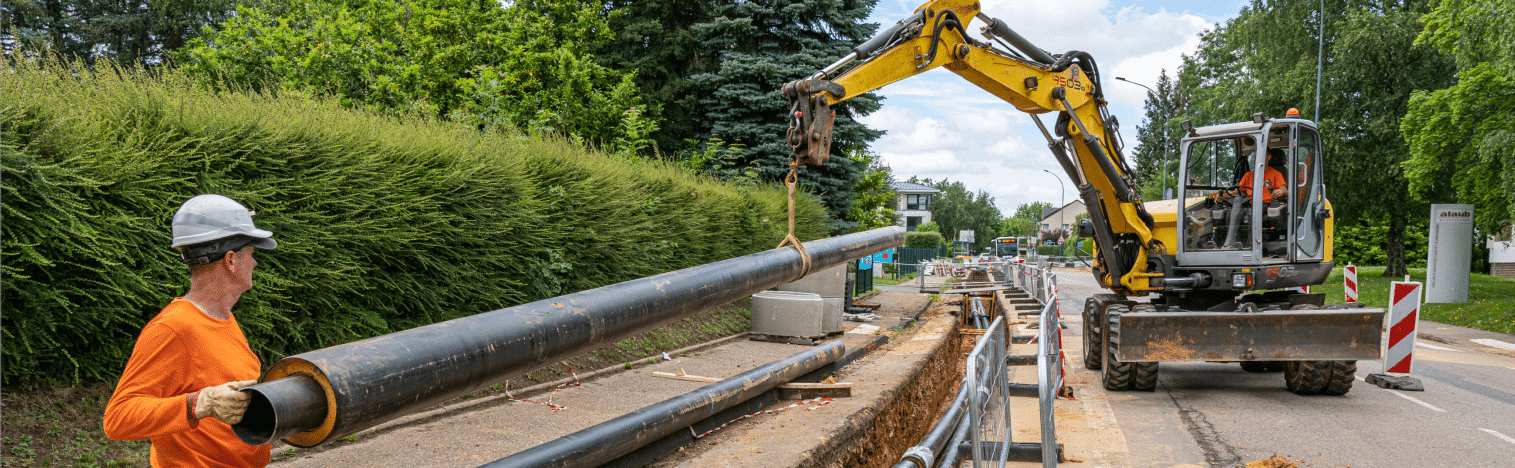
District heating pipelines pose special challenges for construction work during excavation. They transport heated fluid under pressure and can pose significant hazards if damaged. In addition to the danger posed by escaping hot water or steam, structural considerations also play an important role.
When excavating with shoring, the shoring must be capable of withstanding the forces acting on it. This is particularly important when district heating pipes are exposed and additional loads may arise. Inadequate support can lead to dangerous situations.
The GW129 training course explains the importance of these requirements and uses practical examples to illustrate why district heating pipelines require special care.
When working near district heating lines, the guidelines issued by the respective network operator must be strictly followed. These include, in particular, permitted excavation depths and required safety measures. These guidelines are intended to protect the line and ensure the safety of personnel working on the construction site.
Practical Knowledge from the GW129 Training Course
District heating pipelines involve a combination of technical, thermal, and structural risks. For this reason, the network operator’s specifications must be followed with particular care.


Practical Knowledge from the GW129 Training Course
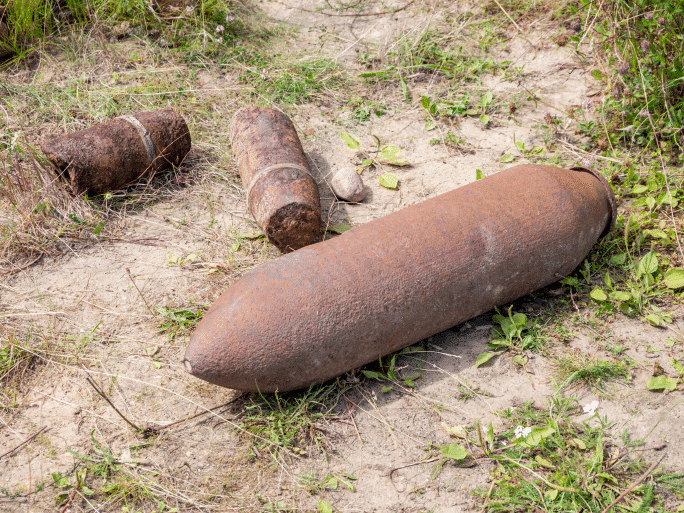
If you suspect the presence of unexploded ordnance, stop work, keep your distance, secure the area, and notify the appropriate authorities. Under no circumstances should you take action on your own in such situations.
Construction Halt and a Systematic Approach in Suspected Cases
During construction work, it cannot be ruled out that unexploded ordnance or objects suspected of being unexploded ordnance may be encountered. In such situations, it is absolutely essential to proceed in an orderly and cautious manner. Any unauthorized movement, examination, or recovery of such objects can pose significant dangers.
If unexploded ordnance or suspicious objects are discovered, construction work must be stopped immediately. The danger zone must be evacuated and secured against unauthorized entry. The client and the relevant authorities must then be notified. These usually include the police and the explosive ordnance disposal unit.
Work may not resume until the situation has been assessed and cleared by the appropriate authorities. Even though unexploded ordnance is not the primary focus of GW129 training, knowing how to respond correctly in the event of a suspected find is crucial for safe construction site operations.
What Seminar Participants Say About Our GW129 Training Courses
You are currently viewing a placeholder content from TrustIndex. To access the actual content, click the button below. Please note that doing so will share data with third-party providers.
More InformationSummary
Expertise, Practical Application, and the GW129 Certificate
Working in the vicinity of utility lines requires attention, expertise, and a clear understanding of the responsibilities of all parties involved. GW129 training helps companies prepare their employees for these requirements and better identify risks in day-to-day construction site operations.
The topics covered on this page illustrate just how diverse the requirements are: from contractors’ obligations and ensuring public safety, to the duty to investigate and damage prevention, all the way to the proper course of action in the event of damage to fiber-optic, electrical, gas, water, or district heating lines. It is not only crucial to know the individual rules, but also to understand their significance for practical construction work.
Schaufelmann GmbH delivers this content through a live training course led by instructors with hands-on experience. Participants’ questions can be addressed immediately and explained using typical scenarios from everyday construction site operations. After successfully passing the written exam, participants receive their GW129 certificate as proof of qualification, which is valid for three years.
If you’d like to do more than just read through the material—if you’d like to learn it in a structured and practical way—you’ll find the latest dates and registration information for the GW129 training course on our website.
Exclusive for Seminar Participants
You can find detailed information on GW129 in our participant brochure.